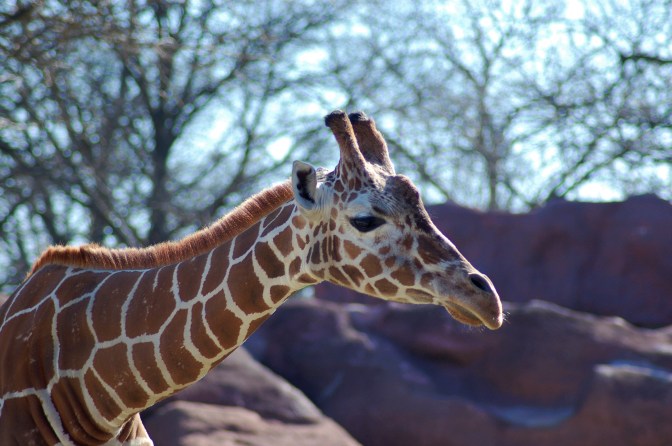
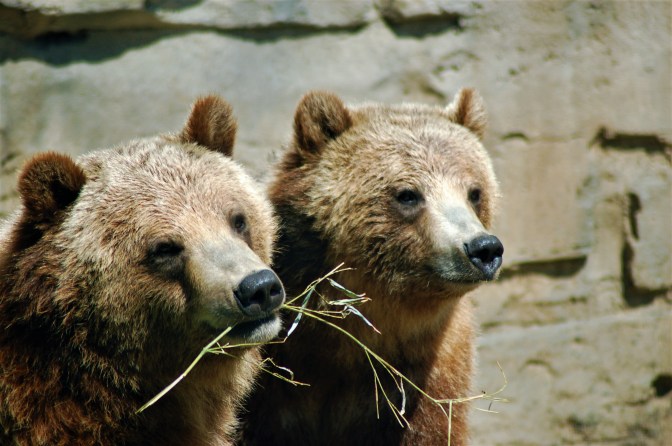
A few months ago I visited the Saint Louis Zoo on one of my days off with the mission of getting some new good animal photographs for Wild for Nature’s social media pages. I spent all afternoon there walking around the different enclosures and trying to capture some decent shots, first of the big cats, then the elephants and apes. However, I still wasn’t satisfied. This wasn’t Africa, this wasn’t the wild. I knew that when I stepped inside the gates, but I was hoping that this visit would be different. That maybe I would feel more excitement this trip since it had been at least a year since I had last gone to the zoo. That excitement never came though, except for a short time while watching the grizzly cubs play in their new exhibit. They seemed excited and happy about the sunny afternoon and their pool with the floating log enrichment. I’ve never been a big proponent of captivity for wildlife (especially cetaceans-whales, dolphins, and porpoises), but as a broke college student with only a part time job, I thought the zoo was better than nothing, so I went home with some nice photos ready to share them to the page. I posted the first one and almost immediately I got a few messages saying “Bears and other wildlife don’t belong in captivity” and I couldn’t completely disagree. They were just saying what I was already thinking, but I was posting what I thought they wanted to see. I must admit at first I was a bit taken aback, but then I realized that it was a good thing. A VERY good thing. It was direct evidence that the tide is changing. Less and less people every year want to see animals in cages and small enclosures for human entertainment. They don’t want to settle for seeing a tiger pacing back and forth across its small yard. Instead they want to see wildlife behaving naturally in the wild. So that begs the question, is there still a place for zoos in our society? Do they and can they still serve a purpose?

Many anti-captivity advocates want the complete closure of all zoos and captive wildlife establishments, believing that no captive space will ever be adequate for a wild animal. They hold the belief that if you want to see any wildlife at all, it is your responsibility to save up and travel to see them in their natural habitat wherever that may be. On the other side of the argument, supporters of zoos hold the belief that they are educating the public on a daily basis and helping people who would otherwise never see a gorilla, tiger, or elephant become stewards of conservation. They also believe that the animals are happy, healthy, well cared for, and aren’t missing out on anything that the wild has to offer. As a person who has seen plenty of wildlife both in the wild and in captive situations, I think that the answer is much more complicated and lies somewhere in the middle.
Many zoos and zoological institutions are beginning to realize that public opinion is shifting on keeping animals in captivity. The Saint Louis Zoo for example is ranked as one of the best zoos in the nation and is constantly trying to improve their habitats. Their grizzly habitat was just renovated and expanded, and their sea lion exhibit is top of the line. The animals all seemed healthy and active when I visited, and the enclosures were kept clean. It is obvious that the people in charge of the zoo and the animals’ care put a lot of heart and dedication into their jobs. Saint Louis Zoo also is planning on purchasing an additional 425 acres in north St. Louis to aid in conservation efforts and to make expanded enclosures for some of the larger carnivores and ungulates (hoofed animals). These are the kinds of improvements that need to be made at zoos across the country if people are going to continue to look favorably upon them. Also, I do believe that zoos do aid in helping the public understand exotic wildlife and conservation. During my visit, I saw hundreds of people pouring through the gates. Children and families excited and laughing as they watched the grizzly cubs wrestle in the water, and in awe of the big cats as they lounged lazily in the sun. There is definitely an opportunity for education in zoos if it is done correctly. Even if I was a bit unenthused, I couldn’t deny how many people were getting exposure to animals they wouldn’t have an opportunity to see otherwise.
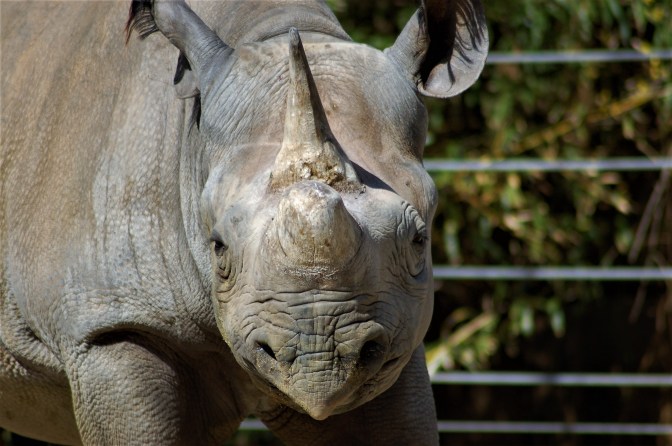
That being said, there is always room for improvement, and I commend Saint Louis Zoo for striving to do better. However, some animals are simply better suited for a captive environment than others. Some do just fine on a smaller amount of acreage with little stimulation, and are perfectly comfortable in a captive environment. Others however, like the large carnivores and elephants may need much more room and mental stimulation to be happy. Some of the tell tale signs that a captive animal is in distress include pacing, weaving, circling, self-mutilation, and biting at the bars. Whales and dolphins for example, in my opinion, should never be held captive because they are far too intelligent and far ranging in their territories to ever be happy in a concrete tank. They are extremely socially complex as well, and all of that is taken away from them in captivity. Therefore, it is my belief that animals held captive should be on a species by species basis. The environment in which they are being held captive also makes all the difference. If any of the above behaviors are witnessed repeatedly, then the animal’s needs are not being properly met. If a zoo can provide enough acreage per animal and the enclosure gives that animal enough space to have a sense of freedom, then education of the public can be done in a way that is enjoyable for both the humans and the animals.
In a changing society, zoos and sanctuaries across the nation (and the world) need to rise to the challenge of providing the best possible life for their animals, even if that means having to sacrifice showcasing a species. The animal’s needs should always be put before the needs of the human or the public. If that can take place, then I believe that zoos can make it into the future. They do not need to be closed down or boycotted completely, they just need to evolve. Zoos may never be as exciting as a safari experience in the true wild, but I do believe that they have an important part to play in our future.
It is one of my biggest dreams to travel to Africa and other wonderful places to bring you photographs of animals in their natural habitat, and I hope that I get to fulfill that dream soon. I also hope that if I visit a zoo or similar institution in the near future, I can do so with the news that they too are working to improve conditions for their animals. The tides are changing in the right direction, we just need to continue to work together to ensure the best possible outcome for everyone involved.

 WILD4NATURE.ORG: EXPLORE, CONSERVE, EDUCATE
Hi Candice,
I stumbled upon your site while looking to see if Wild4Nature was an available name for my own blog platform and was happy to see that the topic of your site is similar to what I am looking to do. I am a registered veterinary technician, have been involved in a conservation project in Rwanda, Africa for the last 4 years with endangered grey crowned cranes, and most recently was the Hospital Manager of Animal Health for a Zoo for 4 1/2 years. My partner and I have just spent 3 months in Africa (Rwanda, South Africa, Namibia, & Botswana) and have another 9-12 months of travelling ahead of us and love wild places and wildlife. I love your posts so far. The topic of Zoos is controversial and while it is better for animals to be in their natural habitats I as well see the benefit of educating the public to care and as many natural habitats are diminishing Zoo’s are a refuge of sorts at least until we can resolve human animal conflicts in their native ranges. I just wanted to say hi and best of luck with your studies and I will for sure continue following you! It is always nice to meet fellow wildlife ambassadors! Keep up the good work.
LikeLiked by 1 person
Hi Laura!
Thank you so much for the wonderful response! Your life sounds so exciting! Spending time in Africa is definitely on my bucket list! I’m headed to Yellowstone at the end of September, so I’ll most likely be writing a few blog posts about my time there. I also started a business Wild for Nature LLC. As of right now it is an online gift store and I plan on donating a portion of all profits to various non-profit wildlife research organizations. I want to continue to expand on it though as the focus of the business is wildlife education and conservation. I would love to collaborate with you in the future! Definitely keep in touch and I’ll follow your blog as well if/when you get yours up and going! You can also email me at candice@wildfornature.org
Thanks again and I hope to hear from you!
-Candice
LikeLike